


The challenge
This global enterprise software leader runs cloud applications for thousands of customers across many industries. Its Kubernetes footprint runs primarily on AKS across Azure and GCP, supporting a global business unit at meaningful scale.
The Kubernetes estate was significantly overprovisioned. The team needed waste identification, observability, rightsizing, and automation in one solution, not four. At this scale, manual tuning was never going to deliver the rigor or the pace the business required.
The solution
The customer deployed Kubex Resource Optimization in their first cluster as a focused proof point.
Kubex analyzed actual workload utilization and generated cluster-specific rightsizing recommendations. The team initially applied changes manually to validate the quality of the recommendations, then moved to automated actioning and watched the node footprint contract from 52 nodes to 23 almost overnight. With the savings established and the approach proven on cluster one, the team is planning to scale the same approach to more clusters.
The results
- 29 nodes removed from their first Kubernetes cluster (52 to 23)
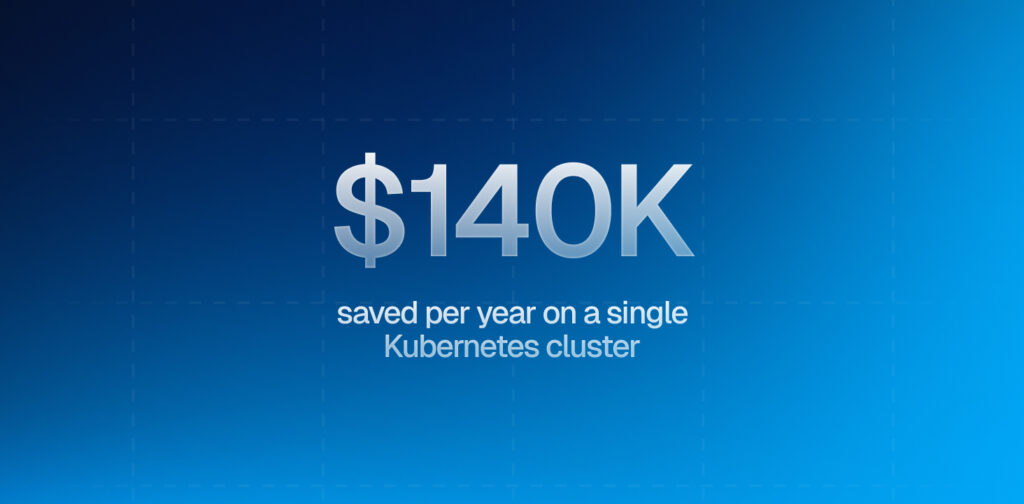
- $140K in annualized cost savings from that one cluster
- Manual cluster-by-cluster tuning replaced by automated Kubex-driven rightsizing
- The first cluster of many. Plans underway to extend continuous, autonomous rightsizing to more clusters


